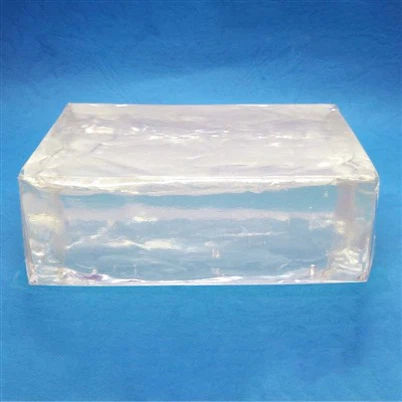
Do hot melt glue sticks work on acrylic?
Leave a message

Acrylic is a popular material known for its versatility, clarity, and durability. It is used in a wide range of applications, from arts and crafts to industrial projects. Meanwhile, hot melt glue sticks are a go - to adhesive for many DIY enthusiasts and professionals due to their ease of use, quick setting time, and relatively low cost. But the question arises: do hot melt glue sticks work on acrylic? As a hot melt glue stick supplier, I'm here to delve into this topic and provide you with all the information you need.
Properties of Acrylic
Acrylic, also known as polymethyl methacrylate (PMMA), has several distinctive properties. It is highly transparent, often used as a substitute for glass because of its optical clarity. Acrylic is also lightweight, shatter - resistant, and has good weatherability, which makes it suitable for both indoor and outdoor use. However, its smooth surface and low surface energy can pose challenges when it comes to adhesion. The smoothness means there are fewer pores or rough areas for an adhesive to grip onto, and the low surface energy makes it difficult for the adhesive to spread and wet the surface effectively.
How Hot Melt Glue Sticks Work
Hot melt glue sticks are thermoplastic adhesives. They come in solid form and are heated in a glue gun. When heated, the glue melts and can be applied to a surface. As it cools down, it solidifies again, creating a bond between the two materials. The setting time of hot melt glue can vary depending on factors such as the type of glue, ambient temperature, and the thickness of the glue layer.
The Bonding Challenge
When it comes to using hot melt glue sticks on acrylic, achieving a strong and long - lasting bond is not always straightforward. The main issue, as mentioned earlier, is the low surface energy of acrylic. Standard hot melt glue may not be able to spread evenly on the acrylic surface, resulting in a weak bond. Additionally, the thermal properties of acrylic can be a factor. Acrylic has a relatively low melting point compared to some other materials, and if the hot melt glue is too hot when applied, it can cause the acrylic to warp or deform.
Types of Hot Melt Glue Sticks and Their Suitability
Electronic Hot Melt Glue Stick
Electronic hot melt glue sticks, such as the ones available at Electronic Hot Melt Glue Stick, are designed to meet the requirements of electronic applications. They often have a specific formulation that provides good insulation properties and a stable bond. When it comes to acrylic, these glue sticks can work well in some cases. Their precision application and ability to bond quickly can be beneficial, especially for small - scale acrylic electronic projects like enclosures or display components. However, it's important to note that the bonding strength may still be affected by the acrylic's surface characteristics.
Fast Setting Hot Melt Glue Stick
Fast Setting Hot Melt Glue Stick offers the advantage of rapid bonding. This can be useful when working with acrylic, especially in time - sensitive projects. The quick setting time reduces the risk of the glue running or the acrylic parts shifting before the bond is formed. However, fast - setting glues may also have less time to wet the acrylic surface fully, which could potentially lead to a weaker bond. It's crucial to apply the glue evenly and press the parts together firmly during the short setting period to maximize the bonding strength.
High Temperature Resistant Glue Stick
High Temperature Resistant Glue Stick is formulated to withstand elevated temperatures without losing its bonding properties. While this can be an advantage in some applications, it also means that the glue may need to be heated to a higher temperature to melt. As mentioned earlier, high temperatures can be a problem for acrylic. If the glue is too hot when applied, it can damage the acrylic surface. However, if used carefully and at the right temperature settings, these glue sticks can provide a strong and durable bond on acrylic, especially in applications where the bonded parts may be exposed to some heat.


Tips for Using Hot Melt Glue Sticks on Acrylic
- Surface Preparation: Before applying the hot melt glue, clean the acrylic surface thoroughly with a mild detergent and water, then dry it completely. This helps to remove any dirt, grease, or contaminants that could interfere with the bonding process. You can also gently sand the acrylic surface with fine - grit sandpaper to create a slightly rough surface for better adhesion. However, be careful not to sand too hard and scratch the acrylic.
- Temperature Control: Set the glue gun to the appropriate temperature. If the glue is too hot, it can damage the acrylic; if it's too cold, it may not bond properly. Start with a lower temperature setting and gradually increase it if necessary.
- Application Technique: Apply the hot melt glue evenly on one of the acrylic surfaces. Use a thin, consistent layer to ensure good coverage. Immediately press the two acrylic parts together firmly and hold them in place for a few seconds until the glue starts to set. This helps to ensure a strong bond.
Case Studies
Let's look at some real - world examples of using hot melt glue sticks on acrylic. In a small - scale craft project, a DIY enthusiast wanted to attach acrylic letters to a wooden board. Using a fast - setting hot melt glue stick, they first cleaned the acrylic letters and the wooden surface. They applied the glue evenly on the back of the letters and quickly pressed them onto the board. After a few minutes, the letters were firmly attached, and the bond held up well over time.
In an industrial setting, a manufacturer was using acrylic panels for a display case. They experimented with different types of hot melt glue sticks, including high - temperature resistant ones. After careful temperature control and surface preparation, they found that the high - temperature resistant glue stick provided a strong and durable bond, even when the display case was exposed to some ambient heat.
Conclusion
So, do hot melt glue sticks work on acrylic? The answer is yes, but with some caveats. While hot melt glue sticks can create a bond on acrylic, achieving a strong and long - lasting bond requires careful consideration of the type of glue stick, surface preparation, temperature control, and application technique. As a hot melt glue stick supplier, we offer a variety of products, including Electronic Hot Melt Glue Stick, Fast Setting Hot Melt Glue Stick, and High Temperature Resistant Glue Stick, to meet different needs.
If you are considering using hot melt glue sticks for your acrylic projects, we encourage you to reach out to us. Our team of experts can provide you with more detailed information and guidance on choosing the right product for your specific application. Whether you are a DIY hobbyist or an industrial manufacturer, we are here to help you find the best adhesive solution for your acrylic bonding needs. Contact us to start a discussion about your procurement requirements and let us work together to achieve the perfect bond.
References
- “Properties of Acrylic Plastics.” Plastics International.
- “Hot Melt Adhesives: Principles and Applications.” By Douglas J. Wicks, Zeno W. Wicks, Jr.